December has a way of making everything feel quieter than it really is.
The leasing phones slow down. Maintenance requests taper off. Even the inbox feels lighter. That calm can be misleading. For rental owners in the Gulf South, this stretch of the year is less about rest and more about perspective. It’s the one moment where looking back actually helps you move forward.
A year-end rental checkup is not about resolutions or grand plans. It’s about asking a few honest questions before January shows up with opinions of its own. Some of the answers will feel reassuring. Others might feel slightly uncomfortable. Both are useful.
Below is a practical walkthrough of what Gulf South landlords should review before the calendar flips. Nothing flashy. Just the things that tend to matter more than expected.
Start With the Numbers, Not the Feelings
Most landlords have a general sense of how the year went. That sense is often optimistic.
A year-end checkup works better when it starts with numbers, even if they are a little uncomfortable. Look at:
- Total rent collected versus projected rent
- Vacancy time across the year
- Maintenance spend, not just major repairs
- Turnover costs, including cleaning and marketing
These figures tell a story that memory usually edits. A property that felt “fine” may reveal longer vacancy gaps than expected. A year that felt expensive might actually be stable when averaged out.
This is where rental property financial review becomes more than bookkeeping. Patterns show up here. And patterns are easier to address in January than in the middle of peak leasing season.
If vacancy crept up or turnover felt frequent, it might be worth revisiting how tenant experience is being handled. Articles like Stop Tenant Churn: The Property Management Strategy That Works explore how small operational gaps often lead to bigger financial ones over time.
Revisit Tenant Retention With Fresh Eyes
Tenant retention tends to get discussed only after a notice is given. By then, it’s already late.
At year-end, retention deserves a quieter review. Ask questions like:
- How many tenants renewed without negotiation?
- How many asked for concessions?
- How many left despite being “good tenants”?
Sometimes retention problems are pricing related. Sometimes they’re not. Communication delays, inconsistent maintenance follow-through, or unclear expectations often show up as move-outs months later.
The Gulf South market has shifted in ways that favor renters in some pockets and landlords in others. Understanding where your property sits in that balance matters. Content such as The Great Tenant Shortage of 2025: Why Good Renters Have All the Power Now offers context on why retention feels harder lately, even when rents are strong.
This review also ties into tenant retention strategies for landlords. Retention is not just about keeping rent slightly below market. It’s about reducing friction. Less friction means fewer surprises. Fewer surprises tend to mean longer stays.
Inspect Maintenance Trends, Not Just Maintenance Costs
Looking at maintenance spending alone can be misleading.
A year-end checkup should focus on trends. What types of repairs showed up repeatedly? Which issues lingered longer than they should have? Were there months where maintenance felt reactive rather than planned?
Deferred maintenance has a way of hiding until it doesn’t. And when it surfaces, it usually does so at the worst possible time. The Gulf South climate is not forgiving in that way.
Reviewing maintenance history alongside inspection reports can highlight risks early. For example, recurring HVAC calls or minor water intrusion issues often precede larger failures. That’s why preventive approaches tend to outperform reactive ones over time.
The article The Maintenance Backlog Problem: Why Deferred Repairs Are Killing ROI breaks down how small delays compound into expensive cycles. It’s not alarmist. It’s practical.
This part of the review also naturally leads into preventive maintenance planning. December is one of the few months where planning feels possible without pressure.
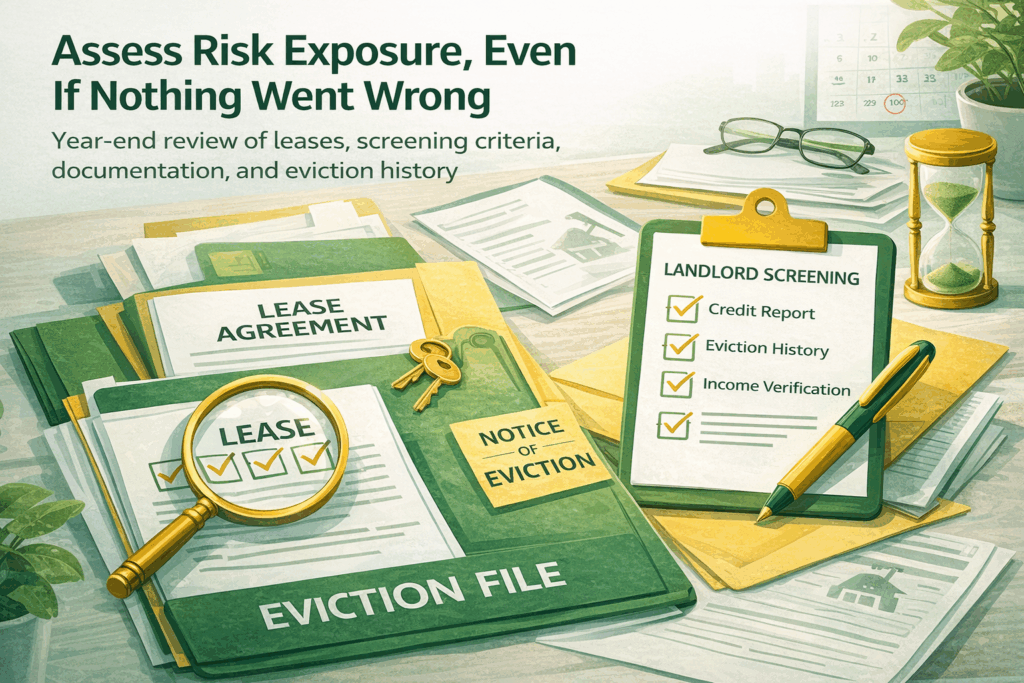
Assess Risk Exposure, Even If Nothing Went Wrong
A year without major legal or compliance issues can create a false sense of security.
Risk exposure does not announce itself in advance. It quietly builds in leases, screening decisions, documentation gaps, and inconsistent enforcement. Year-end is a good time to review:
- Lease templates currently in use
- Screening criteria consistency
- Documentation practices for notices and inspections
- Eviction history, even if minimal
This is less about fear and more about alignment. Policies that made sense two years ago may not fully reflect today’s regulatory environment or market conditions.
Pieces like The 1% Eviction Rate Secret: How Proper Screening Saves Everyone Money highlight how risk reduction is often operational, not legal. Strong systems prevent most issues long before attorneys are involved.
Many landlords find this is where experienced property managers add value, not by reacting to problems but by reducing exposure quietly over time.
Review Leasing Performance, Not Just Vacancy
Vacancy rate alone does not tell the full leasing story.
Look at how long units sat vacant. Look at how many showings were needed before applications came in. Look at how many applications fell through and why.
Leasing friction often shows up in small ways. Pricing that is technically correct but poorly presented. Photos that no longer match the unit condition. Response times that feel acceptable internally but slow to prospects.
The article From ‘For Rent’ to ‘Forget It’: How Landlords Accidentally Turn Away Good Tenants dives into how these small disconnects impact leasing outcomes more than most owners expect.
A year-end leasing review helps answer whether issues are market-driven or system-driven. That distinction matters going into January.
Reflect on Owner Time, Not Just Property Performance
This part gets skipped often.
How much time did managing the property take this year? Not in theory. In reality.
Late-night texts. Vendor coordination. Follow-ups that lingered. Decisions that felt heavier than expected. These do not show up on financial statements, but they do affect sustainability.
For some owners, this review confirms that self-management still fits. For others, it quietly suggests a shift might be needed. That’s usually when conversations about professional property managers become more relevant, especially in markets with climate risk, regulatory complexity, and tenant competition.
Set Fewer Goals, But Make Them Clear
January tends to arrive with long lists. Most of them fade by February.
A better approach is to set two or three priorities based on what the review revealed. Maybe it’s reducing turnover. Maybe it’s formalizing maintenance planning. Maybe it’s tightening screening.
Clarity beats ambition here.
When goals are specific, systems can support them. When goals are vague, even good intentions drift.
Bringing It Together Before January Hits
A year-end rental checkup is not about perfection. It’s about awareness.
The Gulf South rental market rewards owners who adjust early rather than react late. Reviewing numbers, retention, maintenance, risk, and leasing in December creates space to make informed decisions instead of rushed ones.
For owners who prefer support, working with experienced property managers can help translate these reviews into systems that hold up throughout the year. That support is often less about control and more about consistency.
At Wurth Property Management, we work with owners across the Gulf South who want fewer surprises and steadier performance. If reviewing your year raised questions about next steps, we’re always open to a conversation about what better structure could look like in the year ahead.
FAQs
1. Why should landlords review rental performance before January?
A: Because December allows time to assess patterns without the pressure of peak leasing or storm season decisions.
2. What numbers matter most in a year-end rental review?
A: Vacancy time, turnover costs, maintenance trends, and rent collected versus projected.
3. How does tenant retention impact long-term profitability?
A: Retention reduces turnover costs, stabilizes cash flow, and lowers operational stress over time.
4. Is preventive maintenance really worth planning ahead?
A: Yes. Preventive maintenance reduces emergency repairs and limits damage from climate-related risks common in the Gulf South.
5. When should landlords consider professional property management?
A: When time, risk exposure, or system gaps start affecting performance or peace of mind.