
There’s a predictable reaction when turnover increases. Offer a discount. Add a concession. Freeze rent. Sometimes that works. Sometimes it just trains tenants to expect negotiation.
Reducing turnover does not require lowering rent. It requires removing friction.
Understanding how to reduce tenant turnover without lowering rent starts with acknowledging something uncomfortable. Most tenants don’t leave because of price alone. They leave because the experience doesn’t justify the price.
That distinction matters.
Turnover Is Usually an Experience Problem First
When tenants move out, rent often gets blamed immediately.
But if you look closely at exit patterns, something else usually appears. Delayed maintenance. Inconsistent communication. Confusing renewal notices. Minor frustrations that accumulated quietly.
Rent increases amplify dissatisfaction. They rarely create it from scratch.
This is why strong tenant retention strategies in the Gulf South focus on operational consistency before pricing strategy. When the experience feels stable, modest rent adjustments are more likely to be accepted.
When the experience feels chaotic, even flat rent can lose a tenant.
Strategy 1: Standardize Maintenance Response Times
Maintenance is one of the most common drivers of turnover.
Not necessarily because repairs aren’t made. But because they aren’t handled predictably.
Tenants expect acknowledgment. A timeline. Follow-up. Closure. When these steps are unclear, frustration builds.
Reducing turnover without lowering rent often begins with tightening maintenance systems. Not speeding them up unrealistically. Just structuring them.
Discussions about how to stop unnecessary tenant churn often point to this pattern. It’s not about luxury upgrades. It’s about reliability.
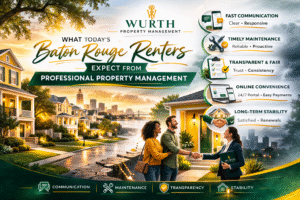
Professional property managers tend to formalize maintenance workflows. Work orders are tracked. Communication is logged. Follow-up is scheduled. That structure alone reduces friction.
Strategy 2: Address Renewal Conversations Earlier
Many landlords wait until 30 days before lease end to discuss renewal.
By that point, tenants have often already made up their minds.
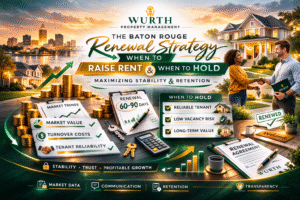
Reducing turnover means shifting renewal conversations earlier. Ninety days out, even earlier in some cases. Framing renewal as a continuation rather than a negotiation changes tone.
This is particularly relevant in markets influenced by shifting renter leverage. Observations about how qualified renters now recognize their position in competitive markets show that proactive communication builds trust.
Tenants want clarity. Not last-minute decisions.
Strategy 3: Improve Communication Clarity
Communication problems are rarely dramatic. They’re subtle.
Emails answered but vaguely. Policies explained but inconsistently. Lease clauses enforced unevenly.
Tenants notice inconsistency more than landlords expect.
This connects closely to the broader idea that transparency strengthens tenant relationships. Clear expectations reduce conflict. Reduced conflict reduces turnover.
Improving clarity does not require additional expense. It requires documentation and consistency.
Strategy 4: Screen for Stability, Not Just Approval
Lowering turnover starts before move-in.
If screening focuses only on minimum qualifications rather than long-term fit, churn increases later. Consistent criteria, applied without exception, protect renewal rates.
Conversations around generational renter preferences also highlight that different groups prioritize different aspects of rental life. Some value flexibility. Others value predictability. Screening that aligns tenants with property realities improves longevity.
This is part of rental property retention strategies that many owners overlook. Turnover prevention starts at application.
Strategy 5: Reduce Policy Surprises
Tenants rarely react well to sudden policy shifts.
New fees. New enforcement patterns. New rules mid-lease.
Reducing surprises increases renewal probability. If policies must change, communicate clearly and early. Document everything. Keep tone neutral.
Professional property managers often implement systems that minimize reactive rule changes. Consistency builds predictability. Predictability supports retention.
Strategy 6: Focus on Stability, Not Incentives
Discounts and perks can support retention, but they rarely fix systemic problems.
Offering a small renewal incentive may help. But if maintenance feels chaotic or communication feels unclear, the incentive becomes temporary.
This is where the concept of what truly keeps renters longer becomes relevant. Often it’s less about perks and more about feeling respected and informed.
Stability outperforms incentives in the long run.
The Financial Math Behind It
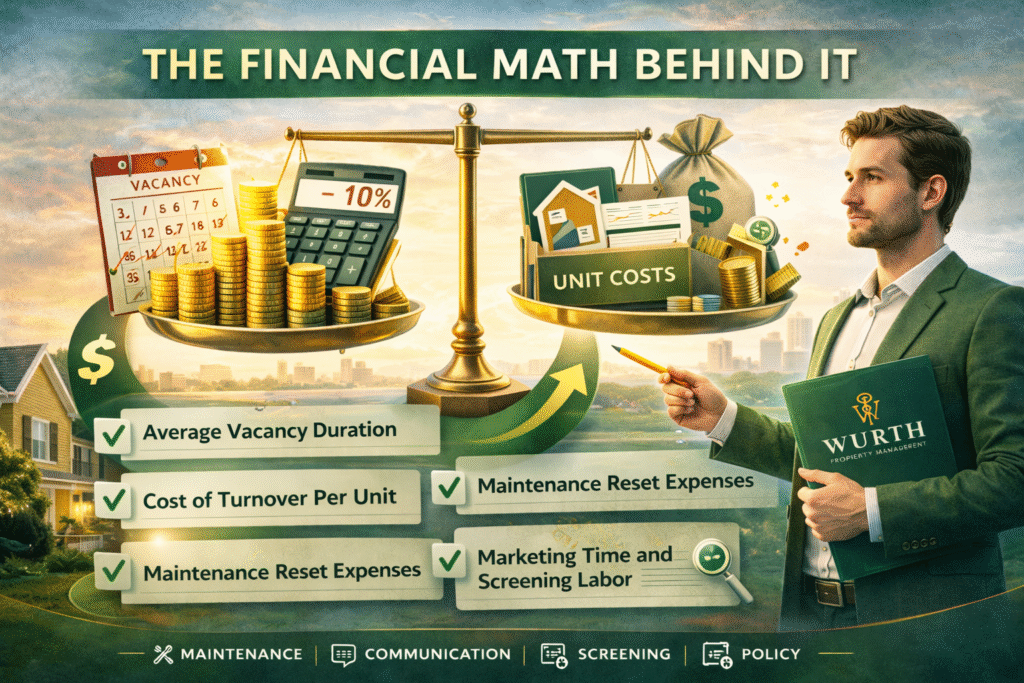
Lowering rent to retain a tenant can work in certain cases. But before adjusting price, evaluate:
- Average vacancy duration
- Cost of turnover per unit
- Maintenance reset expenses
- Marketing time and screening labor
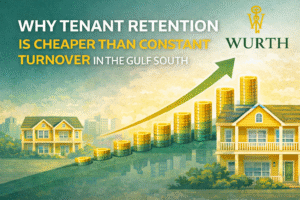
Often, reducing friction produces better returns than reducing rent.
This is why how to improve tenant retention in Baton Rouge often centers on systems rather than pricing adjustments.
When turnover decreases, revenue stabilizes. Stability compounds over time.
What Property Managers See at Scale
Individual landlords may not notice patterns until several turnovers accumulate.
Property managers working across portfolios see trends faster. They recognize when maintenance lag correlates with non-renewals. They see communication gaps reflected in exit surveys.
That visibility allows earlier correction.
Reducing turnover without lowering rent is not about squeezing tenants. It’s about improving operations.
A Quiet Competitive Advantage
In the Gulf South, where weather risks and insurance pressures already affect margins, unnecessary turnover adds volatility.
Reducing churn strengthens performance without changing rent levels.
Tenants who feel informed, respected, and supported are less likely to move purely over modest increases.
That stability is often more valuable than chasing peak pricing.
For owners who want structured systems rather than reactive adjustments, working with experienced property managers can create measurable improvements. At Wurth Property Management, we focus on operational consistency that supports renewal rates without relying on discounts. If turnover has started to feel expensive rather than strategic, it may be time to address the underlying friction.
FAQs
1. Can landlords reduce turnover without lowering rent?
A: Yes. Improving maintenance, communication, and renewal timing often has more impact than price reductions.
2. What causes tenants to move out besides rent increases?
A: Maintenance delays, unclear communication, inconsistent enforcement, and accumulated friction.
3. Does early renewal communication help retention?
A: Yes. Starting renewal conversations earlier improves clarity and reduces surprises.
4. Are incentives necessary to keep tenants?
A: Not always. Stability and predictability often matter more than perks.
5. How do property managers reduce tenant turnover?
A: By standardizing processes, enforcing policies consistently, and improving communication systems.