Maintenance in the Gulf South is not optional. It’s constant.
Humidity lingers. Storms return. Roofs age faster. Drainage gets tested repeatedly. Insurance adjusters don’t accept “we meant to fix that” as a defense.
Preventive maintenance here is not about perfection. It’s about preparation.
Understanding preventive maintenance planning for Gulf South rental properties means accepting something early: the environment will stress your property whether you plan for it or not.
The difference is whether the stress becomes manageable or expensive.
The Climate Reality Owners Cannot Ignore
The Gulf South is beautiful. It’s also demanding.
Heavy rains, tropical systems, long humid seasons, and shifting insurance pressures all affect rental performance. Waiting until something fails is not a strategy here.
This is why conversations about how storm season affects rental performance matter year-round. Storm damage rarely begins with dramatic events. It often starts with minor vulnerabilities left unaddressed.
Loose flashing. Minor roof wear. Slow-draining gutters. Small grading issues around foundations.
These small issues compound.
That is where Gulf South rental property maintenance planning becomes financial protection rather than optional upkeep.
Reactive Maintenance Is the Expensive Version
It is easy to fall into reactive patterns. Something breaks. It gets fixed. Another issue surfaces. It gets addressed.
But reactive maintenance has three consistent problems:
- It is urgent.
- It is often more expensive.
- It creates tenant frustration.
The financial impact of deferred maintenance is not always immediate. But over time, small ignored issues quietly erode ROI. This is the foundation of the broader maintenance backlog problem many landlords eventually face.
Deferred repairs rarely disappear. They accumulate. Preventive maintenance planning interrupts that accumulation.
What Preventive Maintenance Actually Means
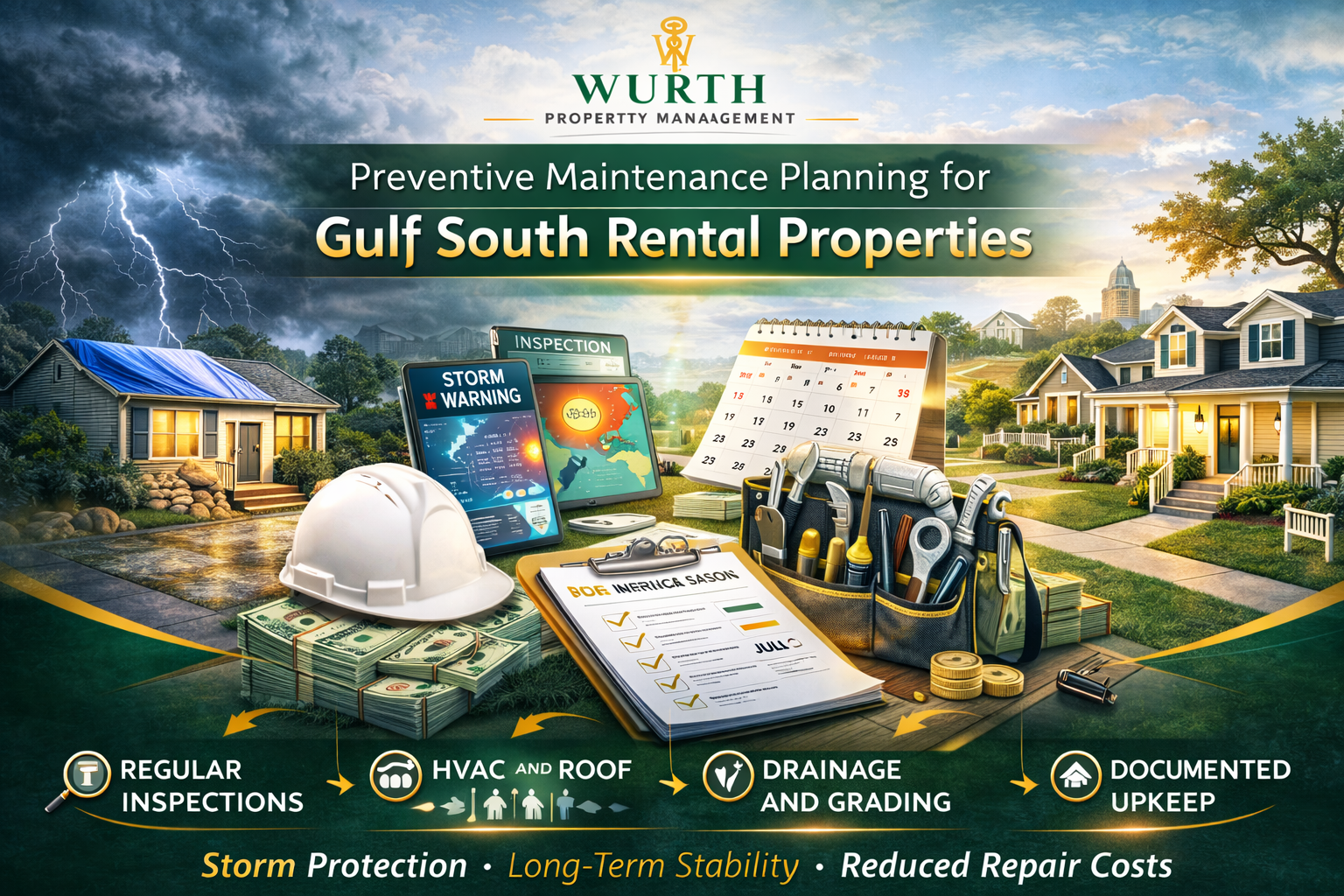
Preventive maintenance is not just seasonal preparation. It is a structured schedule that includes:
- Roof inspections
- Drainage evaluations
- HVAC servicing before peak heat
- Exterior sealing checks
- Foundation monitoring
- Tree trimming near structures
In Gulf South markets, exterior systems carry disproportionate risk.
This is why routine inspection conversations consistently emphasize documentation and consistency. Inspections are not about catching tenants doing something wrong. They are about catching properties aging in predictable ways.
Strong rental property preventive maintenance strategies focus on pattern recognition rather than emergency response.
Storm Season Is Predictable, Even If Storms Aren’t
Every year, storm season returns.What varies is intensity.
Properties that enter the season with unresolved vulnerabilities are more exposed. Minor roof wear becomes intrusion. Minor drainage issues become foundation concerns. Minor tree overgrowth becomes structural risk.
This ties directly into the broader conversation around hurricane-proofing rental portfolios. Preparation reduces loss severity.
Preventive maintenance planning should intensify in the months leading into storm season, not after the first warning.
The goal is not to eliminate risk. It is to narrow it.
Flood Risk Requires Ongoing Attention
Flood exposure is not limited to properties directly inside high-risk zones. Drainage patterns shift. Development alters runoff behavior. Infrastructure ages. Understanding flood zones and rental homes is part of maintenance planning, not just insurance strategy.
Regular grading inspections, drainage flow testing, and foundation checks reduce long-term risk. In Baton Rouge especially, ignoring minor drainage irregularities can create structural consequences over time. Preventive maintenance means noticing early.
Maintenance and Tenant Retention Are Connected
Tenants notice patterns. When maintenance feels reactive or inconsistent, trust declines. When it feels structured and proactive, stability increases.
This is where preventive planning overlaps with retention strategy. Tenants are more likely to renew when repairs feel handled professionally and predictably. They are less likely to tolerate repeated inconveniences tied to preventable issues.
Professional property managers often implement documented maintenance calendars, vendor partnerships, and tracking systems that reduce surprises.
This structure supports both property performance and tenant experience.
Budgeting Becomes Predictable When Maintenance Is Planned
Emergency repairs disrupt cash flow. Planned repairs smooth it.
A scheduled roof repair costs less than an emergency interior remediation. A scheduled HVAC service costs less than a full summer replacement under pressure.
This is the financial side of how to plan maintenance for rental properties in Louisiana. Planning spreads cost across months instead of concentrating it in crisis moments.
Predictability is not just comforting. It is strategic.
What a Preventive Plan Should Include
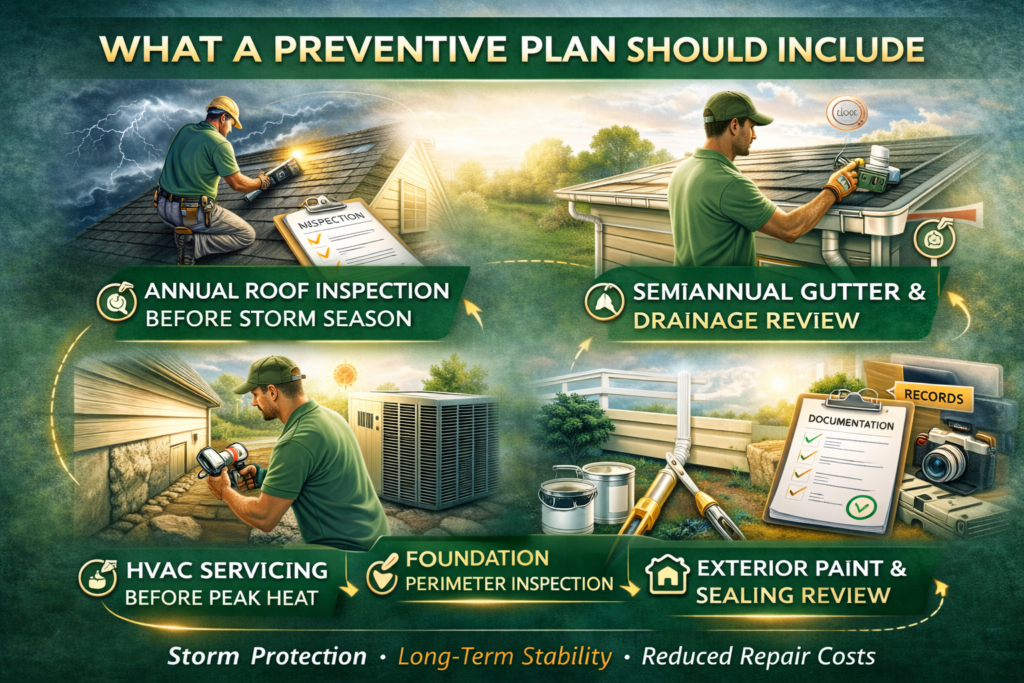
A realistic preventive maintenance plan for Gulf South rentals includes:
- Annual roof inspection before storm season
- Semiannual gutter and drainage review
- HVAC servicing before peak heat
- Foundation perimeter inspection
- Exterior paint and sealing review
- Documentation of all findings
Documentation matters. Insurance claims rely on evidence. Consistent records strengthen position in the event of damage.
Preventive maintenance planning is as much about records as repairs.
The Cost of Ignoring Patterns
Most maintenance failures are not sudden. They are cumulative.
A minor leak ignored for two seasons becomes structural decay. Poor drainage left uncorrected increases foundation stress. Small HVAC inefficiencies compound into system failure.
Owners often assume one quiet year means systems are stable.
It doesn’t. It simply means failure has not surfaced yet.
This is why preventive maintenance planning for Gulf South rental properties must remain continuous, not seasonal.
Scale Reveals the Pattern
Individual landlords may only see isolated issues. Property managers overseeing multiple units see trends.
They recognize which materials deteriorate fastest in humid climates. They notice which roof types fail earlier. They understand seasonal maintenance timing across neighborhoods.
That broader visibility reduces guesswork.
Professional property managers often act as pattern interpreters, not just repair coordinators.
Preventive Maintenance Is Risk Strategy
At its core, preventive maintenance planning is risk management.
It reduces insurance exposure. It protects long-term asset value. It supports tenant retention. It stabilizes operating costs.
In the Gulf South, this is not optional sophistication. It is practical survival.
At Wurth Property Management, we approach maintenance planning as an integrated system rather than a reactive checklist. If your current process feels like responding instead of preparing, we are always open to discussing how a structured preventive approach can protect both your property and your cash flow.
FAQs
1. Why is preventive maintenance important in the Gulf South?
A: Because humidity, storms, and flood exposure increase property stress and risk.
2. What does preventive maintenance include?
A: Roof inspections, drainage reviews, HVAC servicing, foundation checks, and documentation.
3. Does preventive maintenance reduce insurance risk?
A: Yes. Documented upkeep strengthens claims and reduces exposure severity.
4. How often should rental properties be inspected?
A: At least annually, with additional checks before storm season.
5. Do property managers handle preventive maintenance planning?
A: Yes. Many implement structured maintenance calendars and vendor coordination systems.