Raising rent is not complicated. Deciding when to raise rent is.
Every landlord eventually faces the renewal decision. The market may support an increase. Expenses may demand it. Insurance certainly does not wait politely. But the renewal moment is rarely just about math.
In Baton Rouge, where weather volatility, insurance shifts, and tenant leverage all intersect, renewal strategy requires nuance.
Understanding when to raise rent in Baton Rouge rentals is less about timing the market and more about reading the property.
Step One: Separate Market Value From Practical Value
Market rent is a data point. It is not a strategy.
Comparable listings tell you what other landlords are asking. They do not tell you what your tenant is worth to you.
Before raising rent, evaluate:
- Length of tenancy
- Payment history consistency
- Maintenance demand patterns
- Communication history
A tenant who pays reliably, reports issues promptly, and maintains the unit well has value beyond monthly rent.
This is where the broader conversation about why tenant retention is cheaper than turnover becomes relevant. Replacing a strong tenant to capture peak pricing can flatten quickly once vacancy and reset costs enter the picture.
Renewal strategy starts with understanding that stability has financial weight.
Step Two: Evaluate Turnover Risk Honestly
Some tenants will renew regardless of modest increases.
Others are sensitive.
The mistake many landlords make is assuming all tenants respond the same way. They don’t.
Recent discussions around the current renter landscape show that qualified renters in Baton Rouge recognize their position more than they did a few years ago. When options exist, even small friction points can influence decisions.
This is where rental renewal strategy in Baton Rouge becomes situational rather than formulaic.
Ask yourself:
- Would a 3 to 5 percent increase likely trigger a move?
- How long would vacancy realistically last?
- How competitive is your property at the new rate?
The answers matter more than broad market averages.
Step Three: Consider the Cost of Resetting
Resetting rent to full market sounds appealing.
But resetting often includes:
- Vacancy gap
- Cleaning and maintenance reset
- Marketing time
- Screening repetition
- Move-in coordination
These costs are not theoretical.
This ties directly into the financial math behind turnover. Renewal decisions should include these variables before focusing solely on rent growth.
Sometimes holding rent slightly below peak market produces stronger annual performance than chasing the absolute top rate.
This is not about underpricing. It is about weighing stability against volatility.
Step Four: Factor in Tenant Experience
Renewal outcomes are rarely decided in the final 30 days of a lease.
They are shaped by the preceding 11 months.
If maintenance has been structured and responsive, if communication has been consistent, if expectations have been clear, tenants are more likely to accept reasonable increases.
This connects closely to the broader discussion about what today’s Baton Rouge renters expect from property management. Predictability reduces emotional reactions.
A tenant who feels respected is less likely to react strongly to moderate adjustments.
When Raising Rent Makes Sense
There are situations where raising rent is clearly justified.
- The property is significantly below market
- Comparable units are leasing quickly at higher rates
- The tenant has indicated long-term plans
- Operating costs have increased meaningfully
In these cases, a structured increase communicated early and clearly often succeeds.
The key is tone.
Avoid abrupt notices. Provide context. Frame it as part of ongoing property stewardship, not opportunistic pricing.
This is part of how to raise rent without increasing tenant turnover. Communication shapes perception.
When Holding Rent Is the Smarter Move
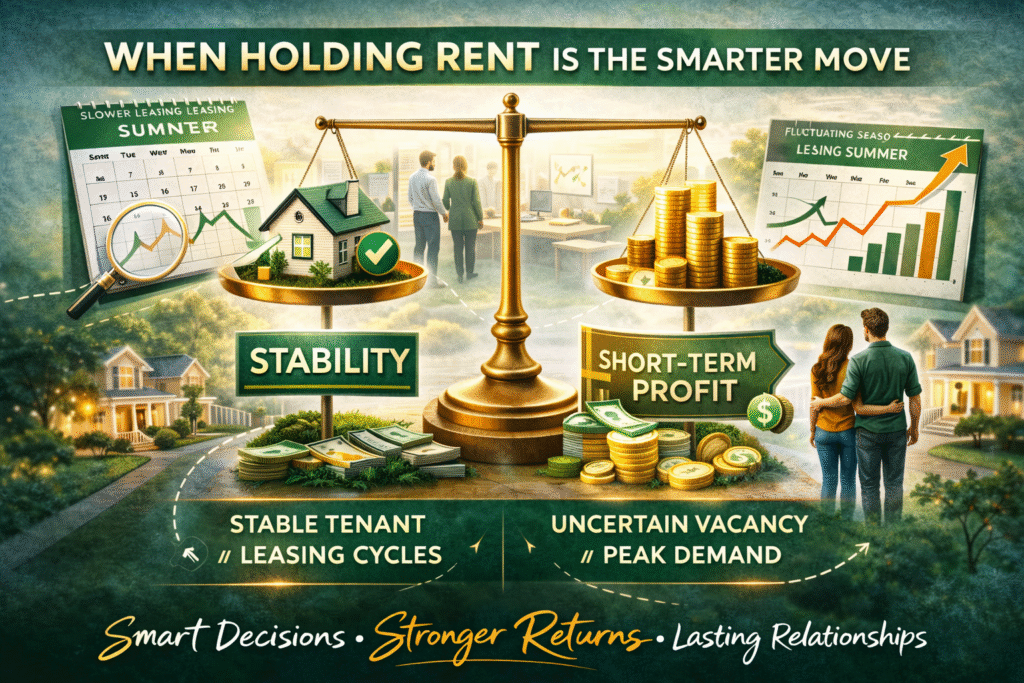
Holding rent can be strategic.
If the tenant is reliable, vacancy risk is uncertain, or maintenance history suggests stability is more valuable than incremental growth, holding rent protects performance.
In Baton Rouge, seasonal leasing cycles also matter. Renewals in slower months carry more risk than those in peak demand periods.
Professional property managers often evaluate timing carefully. They look at portfolio-wide patterns, not just individual units.
Sometimes stability outperforms short-term gain.
The Baton Rouge Variable: Insurance and Climate
Renewal strategy in this market cannot ignore insurance and weather risk.
Rising premiums and storm exposure create pressure to increase rent. That pressure is real.
But tenants are aware of these conditions too.
Transparent communication about cost drivers tends to reduce resistance. Silence increases suspicion.
This is where structured management helps. When explanations are clear and consistent across the portfolio, renewals feel procedural rather than arbitrary.
Early Renewal Communication Changes Outcomes
Waiting until 30 days before expiration limits options.
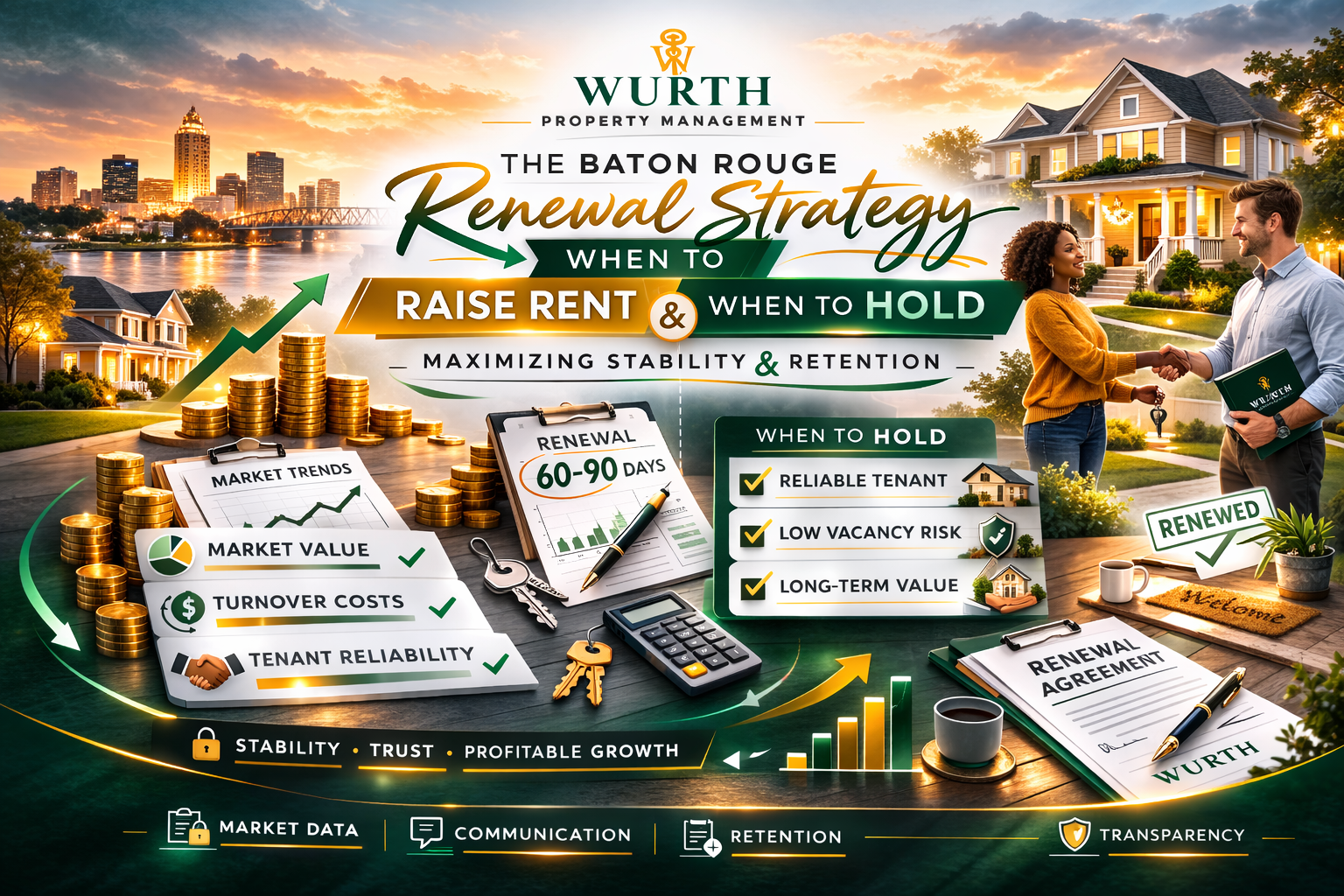
Beginning renewal conversations 60 to 90 days in advance creates space for dialogue. It allows tenants to process increases gradually rather than reactively.
Content around reducing unnecessary tenant churn consistently shows that early communication reduces last-minute surprises.
Renewals should feel like part of an ongoing relationship, not a sudden demand.
A Practical Renewal Framework
When evaluating each renewal, consider:
- Market rate comparison
- Tenant reliability score
- Turnover cost estimate
- Seasonal demand timing
- Maintenance history
If all five support an increase, proceed confidently.
If two or three introduce uncertainty, holding or moderating the increase may outperform aggressive pricing.
This is the foundation of Baton Rouge rent increase strategy that prioritizes performance over pride.
Stability as a Strategy
Rent growth matters. But consistent performance matters more.
Chasing every dollar can increase volatility. Strategic renewals smooth performance across the year.
Professional property managers often serve as a buffer in this process. They evaluate renewal data objectively, communicate increases professionally, and reduce emotional escalation.
At Wurth Property Management, we approach renewals as financial decisions shaped by experience, not impulse. If your current renewal strategy feels reactive or inconsistent, we’re always open to helping evaluate where stability may outperform short-term spikes
FAQs
1. When should landlords raise rent in Baton Rouge?
A: When the property is below market, demand is strong, and turnover risk is low.
2. Is it better to hold rent for good tenants?
A: Often yes, if stability protects against costly vacancy and turnover.
3. How early should renewal conversations begin?
A: Ideally 60 to 90 days before lease expiration.
4. Does raising rent always increase turnover?
A: Not necessarily. Clear communication and reasonable adjustments reduce risk.
5. How do property managers approach renewal strategy?
A: By evaluating market data, tenant reliability, turnover costs, and seasonal demand together