Turnover rarely feels expensive in the moment. A tenant gives notice. The place gets cleaned. Fresh paint goes up. A new listing goes live. A new lease gets signed. On paper, it can even look productive. Market rent resets. The property feels refreshed.
But when you zoom out and look at the full year, constant turnover tells a different story.
In the Gulf South especially, where climate, insurance costs, and maintenance pressures already stretch budgets, stability is not just convenient. It’s financial protection.
Understanding why tenant retention is cheaper than turnover is not about sentiment. It’s about math.
Turnover Costs More Than Most Owners Calculate
Most landlords can list the obvious turnover costs.
Cleaning crews. Touch-up repairs. Marketing expenses. Leasing time. Possibly a leasing commission. These numbers are easy to track.
What tends to get missed are the invisible costs:
- Lost rent during vacancy
- Rushed maintenance decisions
- Administrative time spent screening and onboarding
- Utility overlaps
- The increased risk of a poor replacement decision
When those are added up, even a short vacancy period can wipe out the financial gain of a modest rent increase.
This is where tenant turnover costs in the Gulf South become more significant than they appear at first glance. In humid climates where properties age quickly and storms add unpredictability, every transition carries more operational strain.
A portfolio that turns too frequently feels busier. It is busier. And busy is rarely efficient.
Vacancy Is Not Neutral
There’s an assumption that vacancy is just part of the business. That it evens out over time.
Sometimes it does. Often it doesn’t.
A vacant property in July during peak leasing season may refill quickly. A vacancy in November might not. A storm warning can delay showings. Insurance adjustments can shift budgets. Local competition can quietly increase.
Vacancy introduces variables. And variables create exposure.
This is why discussions around rental property retention strategies often focus less on loyalty and more on predictability. Stability reduces volatility. Volatility is expensive.
Retention Reduces Repetition
Turnover increases repetition. More screening decisions. More lease executions. More move-in inspections. More opportunities for inconsistency.
Every transition requires judgment calls. Even good landlords make slightly different decisions over time. Standards drift. Urgency creeps in. A longer vacancy can lead to relaxed screening.
Content around how to stop unnecessary tenant churn often points to this pattern. Turnover doesn’t just cost money. It increases the number of decision points where risk can slip in.
Retention simplifies operations. Fewer transitions mean fewer chances for errors that compound later.
The Gulf South Market Is Not What It Was
A few years ago, raising rent and replacing tenants felt easy in many areas. Demand outpaced supply. Applicants competed. Owners had leverage.
That balance has shifted in subtle ways.
In some markets, tenants have more options. In others, insurance and operating costs are narrowing margins. Understanding the context matters.
Recent conversations about the current renter landscape have highlighted how good tenants now recognize their value. Retention becomes more important when quality applicants are selective.
This is especially true when you consider generational preferences. Observations about what different renter groups prioritize show that younger tenants often care deeply about communication and responsiveness. Losing them over minor friction points can be more expensive than expected.
Small Friction Points Lead to Big Costs
Most tenants don’t leave over one dramatic issue.
They leave over accumulated friction. Slow maintenance responses. Confusing communication. Inconsistent enforcement. Small frustrations that build quietly.
Retention is not usually saved with a last-minute concession. It’s built over months of steady follow-through.
Discussions around transparency in landlord-tenant relationships consistently show that clarity reduces conflict. When expectations are clear and responses are predictable, renewals become easier.
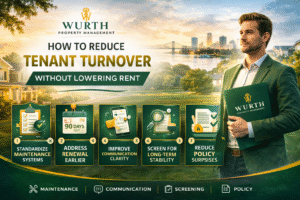
This is why how to reduce tenant turnover often has less to do with pricing and more to do with systems.
The Real Cost of “Resetting to Market”
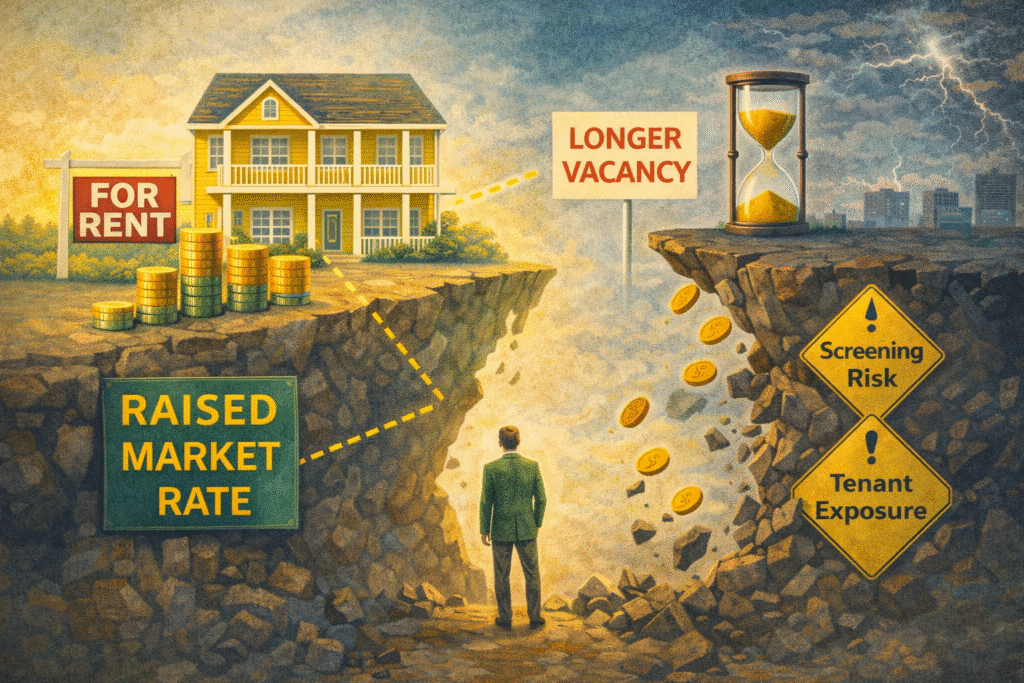
There’s a common argument that turnover allows landlords to reset rent to market rate.
Sometimes that’s true. But resetting rent comes with risk.
A higher advertised rent can extend vacancy slightly. A longer vacancy erodes the gain. A rushed replacement decision increases screening risk. A marginal tenant increases long-term exposure.
What looked like a financial win can flatten quickly.
In many cases, renewing a strong tenant at slightly below peak market rent produces better annual performance than chasing the absolute top rate.
This isn’t about underpricing. It’s about weighing stability against volatility.
Retention Is a Financial Strategy
Retention often gets framed as a relationship strategy.
It’s more accurate to see it as a financial one.
Stable tenants reduce marketing cycles. They reduce maintenance transitions. They reduce screening repetition. They reduce administrative noise.
This directly impacts cash flow consistency, which is often more valuable than sporadic spikes.
For landlords who want to protect long-term performance, long-term rental income stability matters more than short bursts of growth.
Property Managers See the Pattern Over Time
Individual landlords may experience turnover sporadically. Professional property managers see it at scale.
At scale, the pattern becomes obvious.
Properties with consistent communication, preventive maintenance, and clear renewal processes outperform those that rely heavily on rent resets.
This is not about avoiding rent increases. It’s about sequencing them responsibly and supporting them with operational consistency.
Experienced property managers often treat renewals as part of an ongoing relationship, not a negotiation that starts 30 days before lease end.
What Owners Can Review Right Now
If retention is cheaper than turnover, the practical question becomes: where are leaks happening?
Review:
- Average length of stay
- Number of turnovers per property annually
- Vacancy length after each move-out
- Maintenance complaints preceding non-renewals
- Renewal acceptance rates
Patterns emerge quickly when looked at across a full year. Retention doesn’t require perfection. It requires awareness.
Stability Beats Constant Motion
Constant motion can feel productive.
Fresh leases. Updated listings. Market resets. But stability often produces stronger financial outcomes in the Gulf South environment.
Fewer transitions. Fewer surprises. Fewer reactive decisions.
For owners who want help building systems that support retention rather than churn, working with experienced property managers can create structure where friction used to live. At Wurth Property Management, we focus on reducing unnecessary turnover and building predictable performance across portfolios. If tenant movement has started to feel expensive rather than strategic, it may be time to approach retention more intentionally.
FAQs
1. Why is tenant retention cheaper than turnover?
A: Retention avoids vacancy loss, marketing costs, screening repetition, and maintenance resets.
2. How much does tenant turnover typically cost?
A: It varies, but cleaning, vacancy, leasing time, and repairs often exceed the value of short-term rent increases.
3. Is raising rent always worth the risk of vacancy?
A: Not always. Stability often produces stronger annual performance than aggressive resets.
4. How can landlords reduce tenant turnover?
A: By improving communication, maintenance response times, and renewal clarity.
5. Does tenant retention matter more in the Gulf South?
A: Yes. Climate, insurance, and operating costs increase the financial impact of each vacancy.